





Dispatch presents itself as a narrative-driven management game about crisis coordination, communication, and human judgment under pressure. Set within the confined space of an emergency dispatch center, the player acts not as a hero on the ground, but as the unseen decision-maker behind the scenes—routing responders, prioritizing calls, and choosing which emergencies receive attention and which are left waiting. On paper, this setup promises a powerful exploration of responsibility, moral ambiguity, and systemic failure.
However, beneath the game’s strong writing and unique perspective lies a specific and persistent design issue: the way extreme time pressure compresses moral decision-making into efficiency-based reactions rather than reflective choice. While urgency is essential to Dispatch’s theme, the way it is mechanically enforced often undercuts the very ethical complexity the narrative tries to explore.
This article examines how time pressure evolves throughout Dispatch, how it affects player agency, and why it gradually shifts the experience from moral deliberation to operational triage—changing not just how the game is played, but how its story is felt.
1. The Core Premise of Dispatch and Its Promise
Dispatch places the player in a role rarely explored in games: the dispatcher who never leaves their chair but influences countless lives. Unlike action-heavy emergency games, Dispatch centers on communication, prioritization, and incomplete information.
The promise is clear. The player is not rewarded for reflexes or combat skill, but for judgment. Every call represents a human story, and every delay carries consequences.
H3: Power Without Visibility
The dispatcher has immense influence but no direct control over outcomes. This asymmetry creates fertile ground for moral tension.
H4: Narrative Intent
The game clearly aims to explore:
- Systemic failure rather than individual heroism
- Ethical compromise under institutional constraints
- Emotional burnout from repeated exposure to crisis
At this level, Dispatch sets itself apart as a thoughtful narrative experiment.
2. Time Pressure as a Central Mechanic
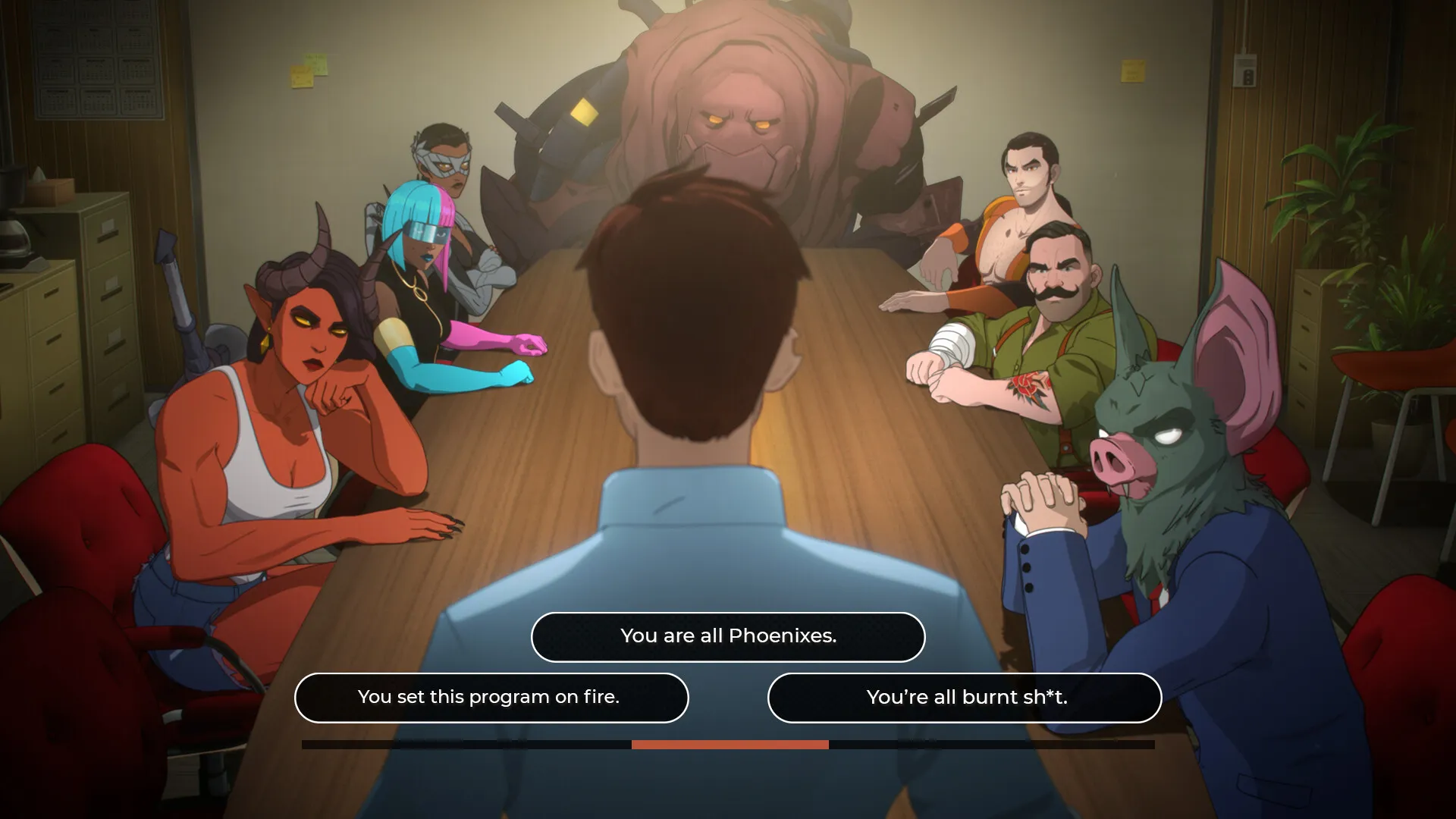
Time pressure in Dispatch is not just thematic—it is mechanical. Calls arrive continuously, response timers tick down visibly, and overlapping emergencies force prioritization.
From the very beginning, the player is trained to act quickly. Delays are punished. Hesitation costs lives, reputation, or internal metrics.
H3: Mechanical Urgency
The game enforces urgency through:
- Countdown timers on calls
- Simultaneous crisis escalation
- Performance ratings tied to speed
H4: Intended Effect
The intent is clear: replicate the stress of real dispatch work. But this stress quickly begins to shape how players think and feel about decisions.
3. Early Game: Urgency Enhances Emotional Engagement
In the opening chapters, time pressure works extremely well.
Players feel tense, alert, and emotionally involved. Each call feels urgent but manageable. There is just enough space to read, interpret tone, and make informed choices.
H3: Controlled Chaos
Early pacing allows:
- Emotional connection to callers
- Consideration of context
- Reflection on moral trade-offs
H4: Player Alignment
At this stage, the player’s emotional state mirrors the dispatcher’s: anxious but attentive, pressured but thoughtful.
4. Escalation Phase: When Urgency Begins to Crowd Out Meaning
As the game progresses, the volume and complexity of calls increase dramatically. Multiple crises overlap, and the system introduces longer chains of consequences tied to earlier decisions.
This is where the core issue begins to surface.
H3: Compression of Choice
Players no longer ask:
“What is the right thing to do?”
Instead, they ask:
“What can I resolve fastest?”
H4: Efficiency Over Ethics
Time pressure shifts decision-making from moral reasoning to throughput optimization. Choices become tactical rather than ethical.
5. Moral Decisions Under a Stopwatch
Dispatch presents morally complex scenarios:
- A domestic dispute with unclear danger
- A medical emergency competing with a public safety threat
- A caller who may be lying or exaggerating
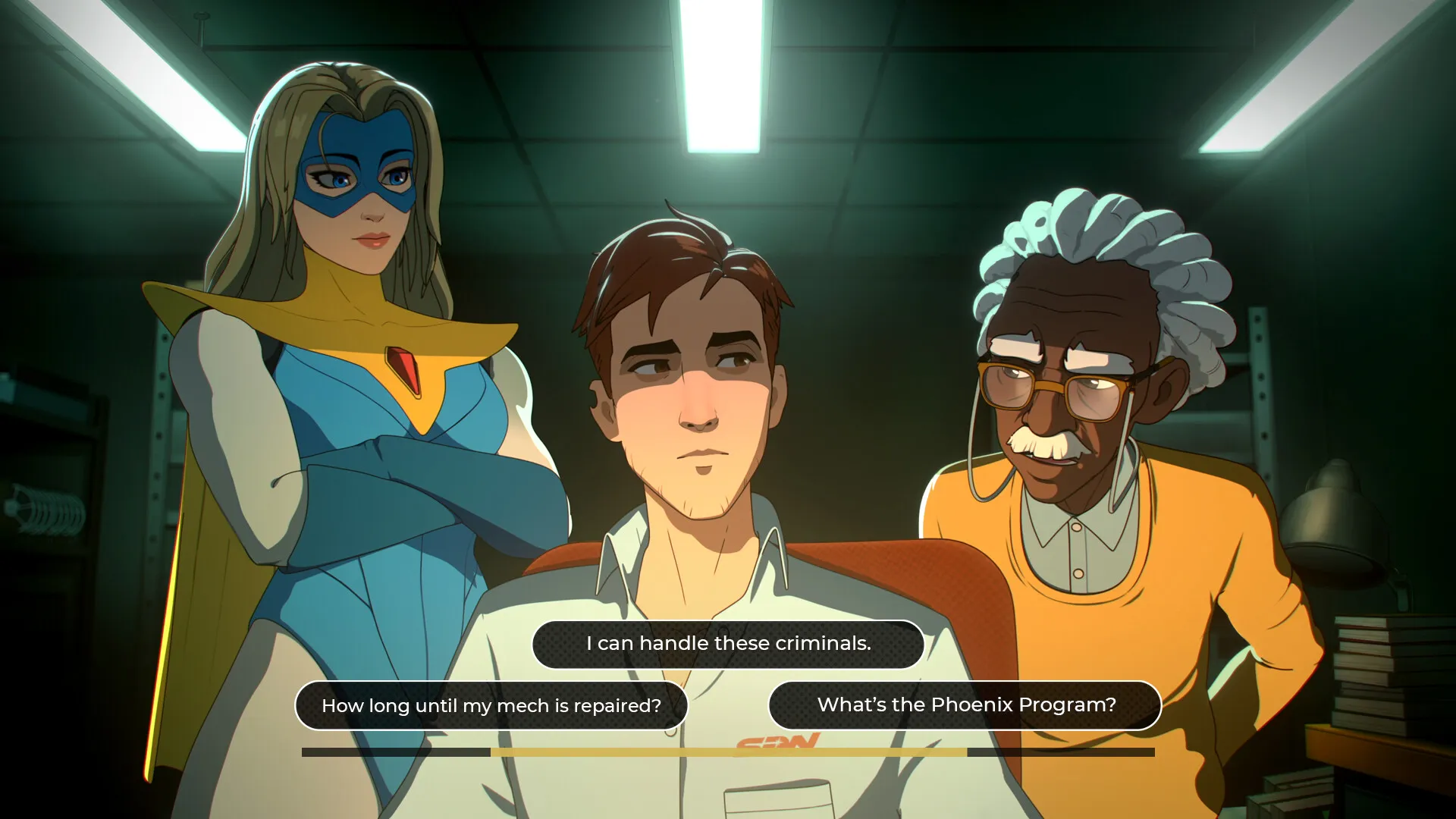
In theory, these require careful judgment. In practice, timers punish deliberation.
H3: The Cost of Thinking
Pausing to reflect often results in:
- Missed deadlines
- Cascading penalties
- Worse system ratings
H4: Behavioral Conditioning
Over time, players learn that thinking deeply is mechanically suboptimal, even when narratively encouraged.
6. Narrative Dissonance: What the Game Says vs What It Rewards
Dispatch’s writing emphasizes empathy, listening, and human complexity. Characters discuss burnout, moral injury, and the weight of decisions.
Yet the systems reward speed, not empathy.
H3: Conflicting Signals
Narrative message:
“Every life matters.”
Mechanical message:
“Resolve calls as fast as possible.”
H4: Resulting Dissonance
This contradiction creates emotional confusion. Players feel punished for engaging with the story at the depth it invites.
7. Player Adaptation: From Moral Agent to System Operator
Players adapt quickly to systems, even when those systems conflict with narrative intent.
In Dispatch, adaptation often means emotional distancing.
H3: Common Adaptive Behaviors
Players begin to:
- Skim dialogue instead of reading
- Favor predictable call types
- Ignore ambiguous situations
- Route resources based on timers, not people
H4: Emotional Flattening
What begins as empathy-driven play becomes procedural. Calls blur together. Moral weight diminishes.
List: Typical Late-Game Player Habits
- Prioritize shortest resolution time
- Avoid “gray area” calls
- Optimize for system score
- Minimize emotional engagement
- Treat callers as data points
8. Burnout as Theme vs Burnout as Experience
Dispatch clearly wants to depict dispatcher burnout as a theme. Characters express fatigue, detachment, and moral exhaustion.
Ironically, the game also induces burnout in the player—but not always in a productive way.
H3: Narrative Burnout
Story-driven burnout can be powerful when it invites reflection.
H4: Mechanical Burnout
But system-induced burnout often results in:
- Disengagement
- Frustration
- Rushing through content
The difference matters.
9. Late Game: When Time Pressure Dominates the Experience
In the later stages, time pressure becomes relentless. There is little downtime, minimal narrative breathing room, and almost no space for reflection.
At this point, Dispatch feels less like a moral simulation and more like a crisis management puzzle.
H3: Loss of Reflective Space
Players rarely get moments to process consequences emotionally.
H4: Witness vs Participant
The player becomes a witness to outcomes rather than an active moral participant.
10. The Core Issue: Urgency Without Elasticity
The fundamental problem is not time pressure itself, but the lack of elasticity in how time pressure responds to player behavior.
H3: What’s Missing
The game lacks:
- Adaptive pacing
- Time dilation during moral choices
- Systems that reward careful judgment
H4: Potential Solutions
Dispatch could preserve urgency while restoring agency by:
- Pausing timers during key moral decisions
- Offering trade-offs between speed and long-term impact
- Making empathy mechanically valuable
- Allowing reflective downtime between crisis waves
These changes would align mechanics with narrative intent.
Conclusion
Dispatch is an ambitious and emotionally resonant game that tackles an underrepresented role in crisis narratives. Its focus on unseen labor, moral compromise, and systemic pressure is commendable, and at its best, it delivers moments of genuine emotional impact.
However, the game’s reliance on unrelenting time pressure gradually undermines its own themes. By conditioning players to prioritize speed over thought, efficiency over empathy, Dispatch transforms moral dilemmas into optimization problems. The result is a subtle erosion of player agency—not because choices lack consequence, but because the system discourages meaningful engagement with them.
Dispatch wants players to feel the weight of responsibility. To fully succeed, it must give them the time to feel it.