





Introduction
If you’ve just started playing Garden Horizons on Roblox, you’re stepping into one of the most addictive farming simulation experiences currently gaining traction among sandbox fans. While the game appears simple at first glance—plant seeds, harvest crops, sell produce—it quickly evolves into a layered economy-driven strategy experience that rewards planning, optimization, and smart progression.
Many new players make the mistake of treating Garden Horizons like a casual click-and-harvest game. In reality, long-term success depends on understanding crop tiers, tool upgrades, seasonal mechanics, server strategy, and efficient reinvestment. This comprehensive beginner’s guide will walk you through everything step-by-step so you can build a profitable, scalable garden from day one.
Whether your goal is to become the richest farmer on the server, dominate leaderboards, or simply enjoy a relaxing progression loop, this guide will give you the strategic foundation you need.
1. Understanding the Core Gameplay Loop
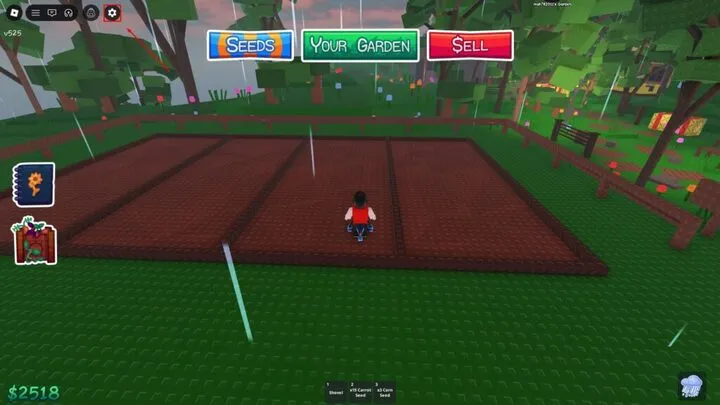
Garden Horizons revolves around a simple but powerful gameplay cycle:
- Buy seeds
- Plant crops
- Harvest produce
- Sell for coins
- Reinvest profits
While this loop feels basic, the key to long-term success is efficiency. Every action you take should aim to increase one of three things:
- Profit per minute
- Experience gain
- Land expansion speed
How Progression Works
Progression is tied to:
- Player level
- Tool upgrades
- Unlockable land zones
- Higher-tier seeds
The faster you level up, the faster you unlock more profitable crops. However, leveling too quickly without reinvesting wisely can leave you cash-poor and inefficient.
Early Game Focus
In your first 1–2 hours:
- Avoid cosmetic spending
- Reinvest all earnings
- Focus on short-growth crops
- Upgrade tools strategically
Your goal isn’t immediate wealth — it’s sustainable scaling.
2. Choosing the Best Starter Crops
Not all crops are created equal. Early on, you’ll have access to low-tier seeds that vary in:
- Growth time
- Sell value
- Harvest yield
Short-Growth Crops vs High-Value Crops
Short-growth crops:
- Faster turnover
- Lower individual profit
- Better for active players
High-value crops:
- Longer wait time
- Higher profit per harvest
- Better for passive play
For beginners, fast-growing crops are ideal because they:
- Generate consistent XP
- Increase harvesting rhythm
- Help you understand the economy
Beginner Strategy
Choose crops that:
- Grow under 5 minutes
- Offer consistent yield
- Allow frequent harvesting cycles
This builds momentum and compounds earnings faster than waiting long periods for one big payout.
3. Mastering Tool Upgrades
Tools dramatically impact efficiency. Your watering can, hoe, and harvesting tools affect how fast you can:
- Prepare soil
- Maintain crops
- Collect produce
What to Upgrade First
Prioritize:
- Harvest speed
- Planting speed
- Area coverage tools
Why? Because time is money. Faster harvesting means:
- More cycles per hour
- More XP
- Faster reinvestment
Avoid Early Over-Upgrading
Don’t spend all your coins on maximum upgrades immediately. Instead:
- Upgrade when it reduces time significantly
- Ensure upgrades increase hourly profit rate
Every upgrade should pay for itself within a short time window.
4. Understanding the In-Game Economy
Garden Horizons features a dynamic in-game market system. Prices fluctuate depending on:
- Demand
- Server activity
- Crop rarity
Supply and Demand Awareness
If many players are farming the same crop:
- Prices may drop
- Profit margins shrink
Smart players diversify crops to avoid market saturation.
Sell Timing Strategy
Instead of selling instantly:
- Monitor price patterns
- Sell when prices peak
- Avoid panic-selling during low cycles
Understanding basic market timing separates average players from top earners.
5. Efficient Farm Layout Design
Layout impacts harvesting speed more than most beginners realize.
Beginner Layout Principles
- Keep walking paths short
- Group similar crops together
- Minimize tool switching
A compact rectangular layout works best early game.
Why Layout Matters
Bad layout:
- Wastes time walking
- Slows harvesting cycles
- Reduces overall profit per hour
Optimized layout:
- Increases efficiency
- Reduces idle time
- Maximizes farming rhythm
Think of your farm as a production factory, not just decoration.
6. Leveling Up Faster
Leveling unlocks:
- New seeds
- New zones
- Better tools
XP Farming Strategy
You earn XP primarily from:
- Planting
- Harvesting
- Completing tasks
The fastest XP method:
- Spam short-growth crops
- Harvest continuously
- Avoid long idle timers
Daily Objectives Matter
Always complete:
- Daily quests
- Limited-time challenges
- Event tasks
These give bonus XP that accelerates progression significantly.
7. Expanding Your Land Strategically
Land expansion allows:
- More crop slots
- Larger production scale
- Higher income potential
When to Expand
Expand when:
- You can consistently fill all current plots
- You’re earning stable profit per cycle
Expanding too early:
- Spreads you thin
- Reduces efficiency
Scaling Smartly
Treat expansion as investment:
- Calculate how many harvest cycles needed to recover cost
- Expand only when ROI is fast
8. Avoiding Common Beginner Mistakes
Many players stall progress due to simple errors.
Mistake #1: Ignoring Efficiency
Focusing on aesthetics instead of production early on slows progression.
Mistake #2: Holding Too Much Inventory
Selling regularly prevents overflow and ensures liquidity.
Mistake #3: Copying High-Level Strategies Too Early
Late-game crop strategies don’t work in early game.
Mistake #4: Wasting Premium Currency
Save premium currency for:
- Permanent boosts
- Expansion discounts
Avoid cosmetic impulse purchases.
9. Understanding Multiplayer & Trading
Playing on Roblox means interacting with other players.
Trading Basics
Trade only:
- Fair-value crops
- Rare seeds when necessary
Avoid:
- Trust trades
- “Too good to be true” deals
Server Selection Strategy
Choose:
- Active but not overcrowded servers
- Stable ping environments
Less competition often means better selling opportunities.
10. Preparing for Mid-Game & Beyond
Once you unlock mid-tier crops, strategy shifts from survival to optimization.
Mid-Game Focus
- Transition to higher profit-per-minute crops
- Invest in efficiency upgrades
- Optimize farm layout further
Long-Term Goals
- Dominate leaderboards
- Unlock rare seeds
- Participate in seasonal events
- Maximize automation tools
By mid-game, your farm should operate like a profit engine.
Conclusion
Garden Horizons may look like a relaxing farming simulator at first glance, but under the surface lies a strategic economic system that rewards efficiency, planning, and smart reinvestment. Beginners who understand crop rotation, tool prioritization, layout optimization, and market awareness gain a massive advantage over casual players.
The key to early success is simple: maximize profit per minute, reinvest wisely, and scale strategically. If you follow the structured approach outlined in this guide, you won’t just survive your early hours in Garden Horizons — you’ll build a foundation for long-term dominance.
Now it’s time to grab your seeds, plan your layout, and turn your small starter plot into a thriving farming empire.